


 12:48 PM
 Admin
Admin


Welcome to the World of Pokemon
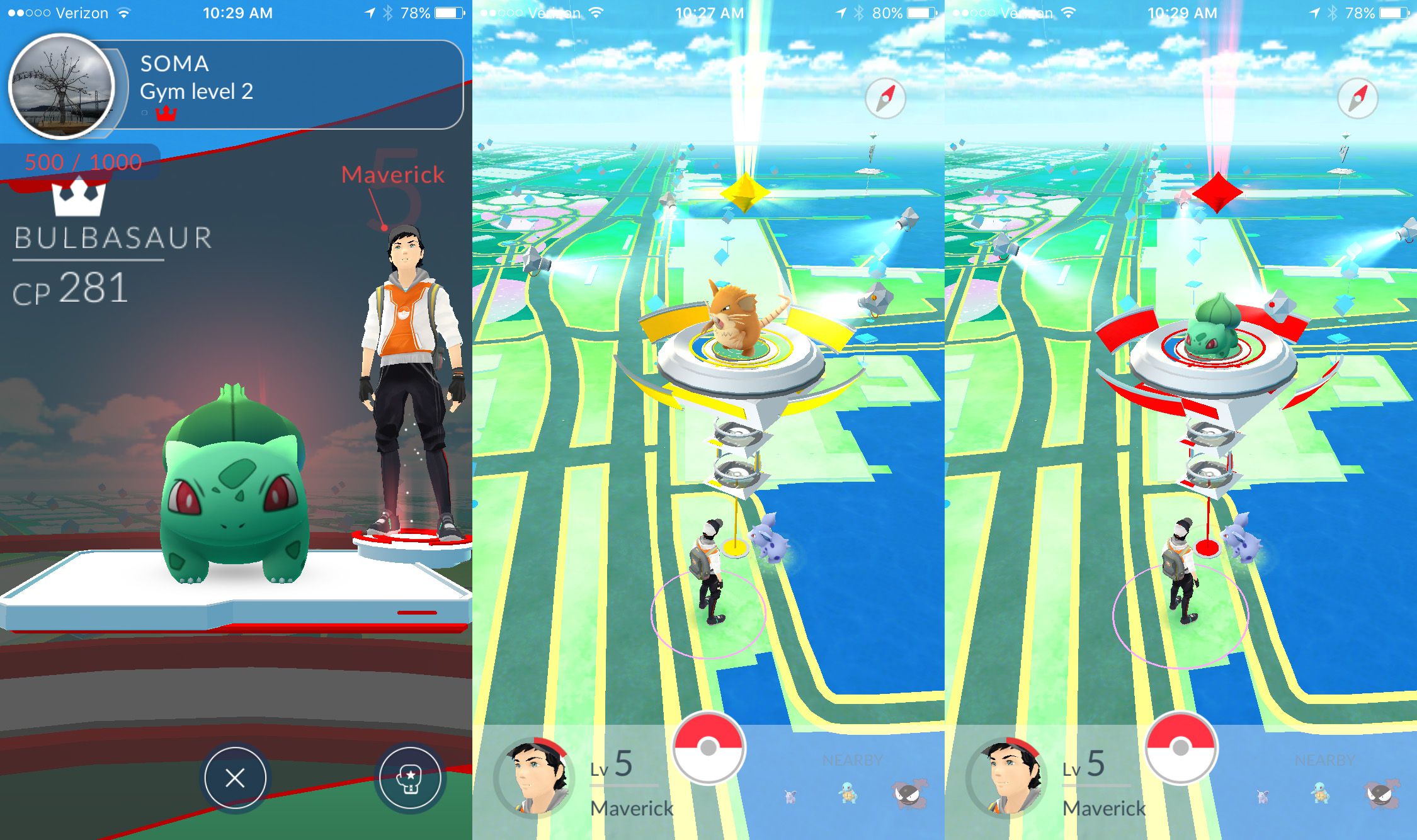 At least in the short term, Pokemon Go is a proven phenomenon with millions of players. I was at a party in the San Francisco Bay Area over the weekend where at least two dozen adults were out on the front lawn, calling out the names of Pokemon as they appeared on our phones. We ran inside when someone claimed a Bulbasaur was in the fridge; we ran back outside for Ponyta. We walked a block or two to challenge a nearby Gym only to have it taken over right from under us by someone we didn't know and couldn't see, and we all had the app crash on us a few too many times during our hour out and about. It was silly and frustrating and fun all at once.
 Battles for control of Gym locations are nothing more than simple, real-time tapping-based combat, and it’s virtually unaffected by anything other than combat point value. Even Pokemon’s rock-paper-scissors type matchups hardly matter, either — if you have the higher-powered monster, you’re all but guaranteed to win. It’s boring by itself and, like the combat points system, isn’t explained well. (There’s dodging, but it doesn’t seem to do much to turn the tide of a fight.) It’s not that the only acceptable form of combat is turn-based and tactical, but the system in its place here is simply a dull chore after just a few fights.
On top of that, the app itself is stuttery, crashy, and performs inconsistently. There are updates that help with this, and it’s not a dealbreaker, but it’s often frustrating. I’ve lost semi-rare Pokemon to random crashes that struck during crucial moments (though sometimes those seemingly escaped Pokemon show up as caught once I reload after the crash).

 Right now, Pokemon Go is an incredible, can’t-miss social experience — like Pokemon is actually real and everyone is on board — but its RPG mechanics and combat don’t have nearly enough depth to support itself in the long term. If people start to lose interest due to its lack of depth once the novelty of seeing Pokemon pop up around their everyday lives expires, the community will fall apart and the spell will be broken. What Pokemon Go needs is more features to support that real-world interaction. Things like Pokemon trading and leader boards, which developer Niantic says are incoming, could keep that momentum up. Even if it will be short-lived, though, there’s no doubt it’s exciting to be a part of while it lasts.
 Posted in:


1 comments:
Post a Comment